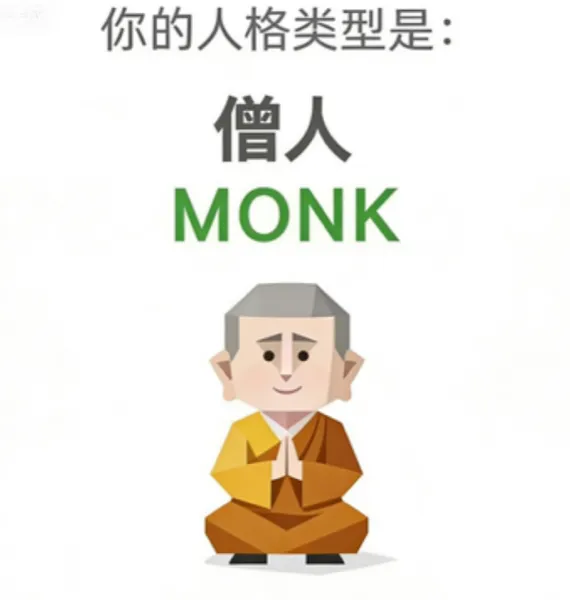
MONK × INTJ — Selective Exile
You’re not antisocial. You’re highly selective about where your energy goes.
Your standards for social access are high.
It’s not personal. It’s filtration.
Warmth exists — it’s just concentrated in very few places.
Monk · meets 16 MBTI styles
I simply do not have that worldly craving.
The baseline MONK energy: the noise of the world is a little too loud for your nervous system, and peace is not a luxury — it’s infrastructure.
MBTI decides what your solitude is for, what happens when you’re interrupted, and why you occasionally come back down the mountain.
This page should feel more like a screenshot-worthy personality read than a compatibility encyclopedia.
Scan the grid, click the one that feels suspiciously like you, then keep scrolling for the fuller read. MVP keeps everything on one page on purpose.
You’re not antisocial. You’re highly selective about where your energy goes.
Jump to readAlone is where your brain finally gets proper bandwidth.
Jump to readYou come down from the mountain for important work, not random noise.
Jump to readYou vanish for ages, then show up and destabilize the whole discussion in the best way.
Jump to readYour silence is doing more than most people’s talking.
Jump to readAlone does not mean empty in your case.
Jump to readYou crave retreat and still can’t fully ignore someone who needs you.
Jump to readYou need quiet until your own brain invents a reason to re-enter civilization.
Jump to readYou know when you’re available and when you are not, and you communicate that like an adult.
Jump to readYou won’t always be around, but when it counts, you are.
Jump to readAlone time is planned. Re-entry has objectives.
Jump to readYou want peace and still mentally monitor everyone while having it.
Jump to readI’m not here. I don’t owe an essay about it.
Jump to readYour alone time looks better than some people’s social life.
Jump to readUsually absent. Weirdly first on scene when it matters.
Jump to readBoth the cave and the party are real needs for you.
Jump to readYou’re not antisocial. You’re highly selective about where your energy goes.
Your standards for social access are high.
It’s not personal. It’s filtration.
Warmth exists — it’s just concentrated in very few places.
Alone is where your brain finally gets proper bandwidth.
Your internal life thrives in low-noise conditions.
Other people worry you’re lonely.
You’re usually just in your best operating environment.
You come down from the mountain for important work, not random noise.
You don’t participate constantly.
You deploy selectively.
That gives your appearances unusual force.
You vanish for ages, then show up and destabilize the whole discussion in the best way.
You don’t need constant presence to be influential.
One good entrance, a few sharp ideas, then gone again.
Very mysterious. Very effective.
Your silence is doing more than most people’s talking.
You perceive a great deal from the edges.
You don’t need constant participation to understand the room.
That makes you both peaceful and weirdly intense.
Alone does not mean empty in your case.
Your solitude is emotionally populated.
You are not under-furnished internally.
That’s why people often misread your quiet as deprivation when it’s actually richness.
You crave retreat and still can’t fully ignore someone who needs you.
Your desire for silence competes with your care for others.
That tension creates a very tender kind of exile.
You leave, but not all the way.
You need quiet until your own brain invents a reason to re-enter civilization.
You absolutely require stillness.
You just don’t always stay in it long because curiosity starts tapping on the cave wall.
You know when you’re available and when you are not, and you communicate that like an adult.
Your private time is protected deliberately.
That makes you surprisingly easy to deal with: your boundaries are clear, stable, and not secretly punitive.
You won’t always be around, but when it counts, you are.
You do need retreat.
Still, people can depend on you at meaningful moments.
That balance makes your presence feel valuable rather than constant.
Alone time is planned. Re-entry has objectives.
You treat solitude like maintenance and participation like deployment.
This is an unusually effective way to preserve both competence and sanity.
You want peace and still mentally monitor everyone while having it.
Your retreat gets interrupted by relational concern.
Even while alone, part of your mind is checking whether people are okay.
You are not bad at detaching. You just care too much to do it cleanly.
I’m not here. I don’t owe an essay about it.
Your solitude is direct, unapologetic, and not up for committee review.
That autonomy is one of your most enviable traits.
Your alone time looks better than some people’s social life.
You turn quiet living into an art form.
It isn’t barren. It’s curated.
That makes your peace feel attractive rather than merely withdrawn.
Usually absent. Weirdly first on scene when it matters.
You don’t need regular participation to care.
When something real happens, you enter fast and effectively.
That contrast makes a strong impression.
Both the cave and the party are real needs for you.
Your life swings between retreat and delight.
Neither state cancels the other.
People may find that inconsistent. It’s actually honest.